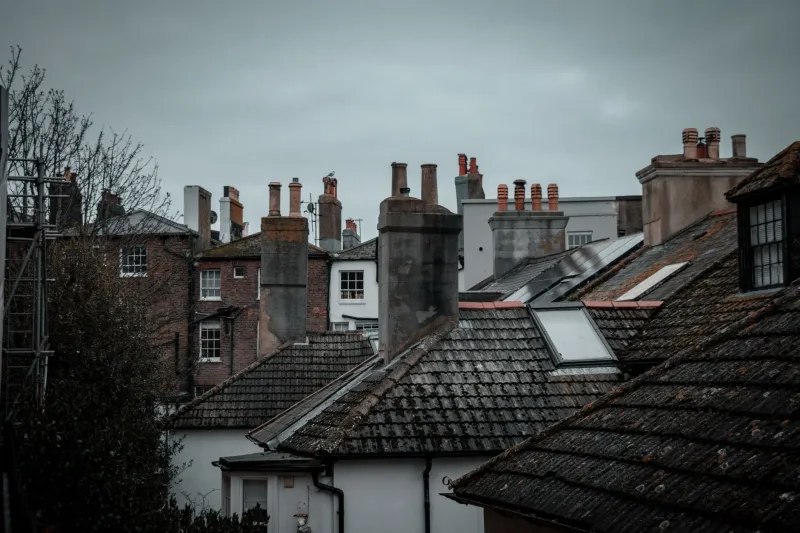
When the Wind Drops: A First-48-Hours Triage Plan for Old Wessex Houses

Photo: not stated in source, possibly Harry A. Kerwin (b.1891), Public domain, via Wikimedia Commons
A severe gale announces itself loudly, but its consequences often reveal themselves quietly: a lifted ridge tile, a damp patch spreading across a plaster ceiling, a chimney pot resting at an unfamiliar angle. The first instinct for many owners of old Wessex houses is to begin repairing immediately. In practice, the first 48 hours are better spent making the building safe, recording what has happened and preventing small defects from becoming expensive ones.
Historic houses in Dorset, Wiltshire, Hampshire and Somerset present particular vulnerabilities. Cob walls soften when saturated, thatch can lift or admit water at the eaves, lime plaster suffers when trapped moisture cannot escape, and old chimneys are exposed to wind loads that modern flues seldom experience. The aim is not to restore the house in a weekend. It is to stabilise it, document the damage and prepare for informed repair.
Before Inspection: Make the Immediate Site Safe
Do not enter a building that shows signs of structural distress. Sagging roof lines, new cracks wider than a pencil, a leaning chimney, displaced ridge tiles or a bowing wall are reasons to keep clear and call a structural engineer or building control officer. Fallen trees may be resting on buildings, fences or power lines; never attempt to move them if there is any chance they are carrying a live cable or supporting part of a structure.
Check the approach from a distance first. Look for overhead cables, loose slates on roofs, unstable garden walls and hanging gutters. Keep children and pets away from the area. If you smell gas, leave the property and call the National Gas Emergency Service on 0800 111 999. If electricity supply equipment is damaged, contact your distribution network operator rather than approaching the damage yourself.
Only after the site has been assessed from ground level should a cautious internal inspection begin. Use a torch, avoid standing beneath cracked ceilings, and do not climb ladders to inspect roofs or chimneys. A roof inspection by the owner is not a saving; it is a risk.
Record First, Repair Second
Photographic evidence is one of the most valuable tools available after a storm. Take wide photographs showing the room or elevation in context, followed by close-up images of each defect. Include something for scale where useful, and note the date and time. Video can be helpful where water is actively tracking across a ceiling or down a wall.
Do not clear debris before it has been recorded, unless it poses an immediate hazard. Fallen roofing, broken glass, displaced stone and saturated plaster all tell the insurer and the conservation officer what happened. Keep any detached historic fabric, such as a piece of carved timber, a slate, a chimney pot or a section of moulding, labelled and stored safely. It may be repairable or useful as a pattern.
A simple notebook remains useful. Record which rooms are affected, where water is entering, what has been moved and which temporary measures have been taken. Receipts for tarpaulins, pumps, glazing repairs and emergency call-outs should be kept together.
What Can Safely Be Made Watertight Now
Emergency weatherproofing should be temporary, reversible and proportionate. A competent roofer may secure a tarpaulin over a damaged roof covering, but it must be weighted or fixed in a way that does not damage historic tiles, leadwork or thatch. In many cases the correct approach is to protect the interior rather than to attempt work on the roof in poor conditions.
Move furniture and valuables away from damp areas. Place trays or buckets beneath active drips, but avoid spreading water further by walking through saturated rooms. If water is entering near electrical fittings, isolate the relevant circuit at the consumer unit only if it is safe to do so. Broken windows can be temporarily boarded, preferably from the outside, using methods that do not damage historic frames. For listed buildings, note that even temporary works should be recorded and, where practicable, discussed with the local planning authority.
Do not seal wet walls with plastic sheeting or apply cement-based patching in an attempt to stop leaks. Old walls need to dry, and trapping moisture can cause more harm than the original storm damage. Similarly, avoid using powerful heaters or dehumidifiers aggressively in cob, timber-frame or plaster areas without specialist advice; rapid drying can cause salt movement, shrinkage and cracking.
Cob, Plaster and Timber: Slow Drying Is Usually Best
Wet cob loses strength and should not be prodded, scraped or loaded while soft. Remove standing water, improve ventilation and allow the fabric to dry gradually. Do not cover damp cob with impermeable render or paint. If a cob wall has moved, bulged or lost sections, keep people away and seek specialist assessment.
Lime plaster can often survive wetting if it is allowed to dry naturally. Resist the temptation to cut out damp plaster immediately. Photograph the area, remove any loose and hazardous pieces, and consult a conservation specialist before deciding whether repair or replacement is appropriate. Historic plaster may retain valuable evidence of earlier finishes and construction.
Timber frames and joists should be dried slowly and monitored. Look for signs of movement, such as sticking doors, new gaps at joints or cracking along ceilings. Where water has penetrated around joist ends or wall plates, a timber specialist may need to assess the extent of saturation and any pre-existing decay. Thatch should not be climbed on or temporarily patched by anyone other than a thatcher; a lifted area can be surprisingly dangerous and difficult to secure.
Chimneys, Trees and Garden Structures
Displaced chimney pots and leaning stacks are common after high winds. Cordon off the area below and do not attempt to re-bed a pot from a ladder. A chimney engineer or conservation builder should assess the stack, flaunching and flue. Fallen trees require care: if a tree is touching a building, it may be providing temporary support, and cutting it can cause sudden movement. If it is near power lines, keep well clear and contact the network operator.
Garden walls, gate piers and outbuildings deserve the same caution. A leaning brick or stone wall may be unstable even if it looks intact. Keep vehicles and pedestrians away until it has been assessed.
The Consent Question: Temporary Versus Permanent
Owners of listed buildings sometimes assume that storm damage removes the need for consent. Emergency works to prevent imminent danger or further weather ingress may be permissible in a limited way, but the local planning authority should be notified as soon as possible. Permanent repairs, alterations, replacement materials and changes to historic fabric will usually require listed building consent. In a conservation area, some external works may also need permission.
The safe course is to separate temporary protection from permanent repair. Keep temporary works minimal, record them and retain any historic material removed. Do not allow a contractor to replace slate with concrete tile, lime render with cement, or historic timber with modern softwood without advice. If there is any doubt, stop and speak to the conservation officer before work proceeds.
When to Call a Specialist
Call a conservation-accredited professional or structural engineer promptly if there is movement in walls or roofs, cracking around lintels or openings, a displaced chimney, saturated cob, historic plaster of particular quality, thatch damage, or any suspicion that a timber frame has been affected. A builder experienced with modern housing may be excellent at emergency work but unfamiliar with the behaviour of old Wessex fabric.
Insurers and the Paper Trail
Notify your insurer without delay, even if the damage appears modest. Provide photographs, a written summary and an initial estimate of affected areas. Ask whether the insurer wishes to appoint a loss adjuster before permanent repairs begin. Keep damaged items until they have been inspected, unless they are hazardous. Do not accept a quick settlement before the full scope of repair has been understood, particularly where historic materials or consent requirements are involved.
In the days that follow, monitor for new damp patches after each spell of rain. Record any changes and keep the building ventilated. The first 48 hours are about safety and evidence; the months that follow are about careful repair. Handled in that order, storm damage can be contained without sacrificing the historic character that makes an old Wessex house worth caring for.