From Stack to Hearth: A Measured Chimney Inspection for Historic Wessex Homes
As November 2026 draws the household back towards the hearth, the chimney resumes a role that is both practical and symbolic in an old Wessex house. It is a route for smoke, a feature of the roofscape, and often a piece of historic fabric in its own right. Yet a chimney that has stood quietly through the warmer months can conceal loose flaunching, a displaced pot, a bird's nest or a flue that has never been properly understood. The prudent approach is neither to ignore the stack nor to treat it as a source of alarm, but to assess it in an ordered way before the first fire is lit.
A chimney inspection is not a single task. It begins indoors, continues at roof level where safe access allows, and is completed by a suitably qualified person where flue condition or smoke performance needs to be established. For listed buildings and thatched properties in particular, the exercise should be recorded and any proposed repair considered against the building's historic character.
Begin at the fireplace, not on the roof
The most useful first observations are made inside the room. Look at the fireplace opening, the surround and the hearth for recent soot falls, dark staining, salts, damp patches or a smell of tar. Corroded metalwork, a damaged register plate or a fireplace that has been partly closed with modern materials may all indicate that the flue has been altered without a clear record. Check that the damper or throat arrangement, where present, moves freely and that ventilation into the room has not been blocked by furniture or draught-proofing.
If the fireplace has not been used for several years, do not assume that it is ready because it looks sound. Soot, debris and nests can accumulate in an unused flue, and old parging may have cracked. A torch and a cautious eye can reveal blockage at the opening, but the flue itself requires proper examination. This is also the moment to confirm that smoke alarms and a carbon monoxide alarm are in working order; the latter is a sensible safeguard in any home with a solid-fuel appliance or open fire.
Reading the stack from ground and roof
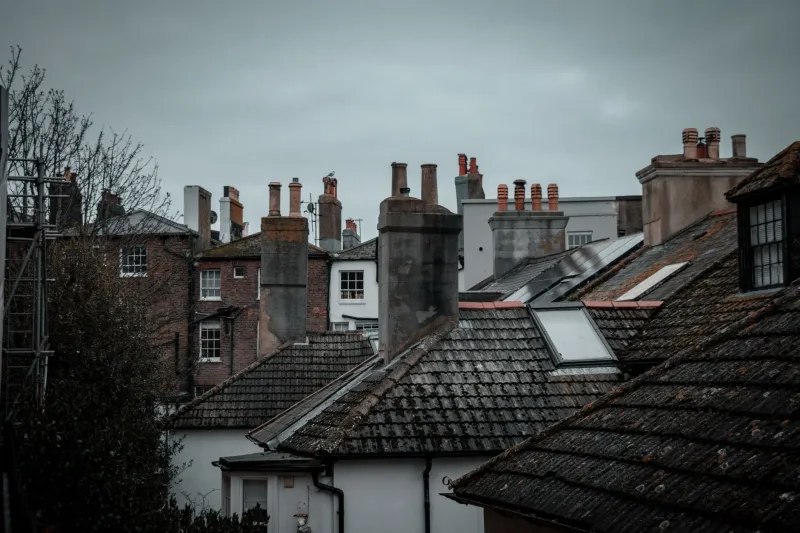
From the ground, note whether the stack leans, whether mortar joints have eroded, and whether vegetation is growing from the brickwork or flaunching. Staining on the outside of the stack may point to water entering at the crown or running down an unlined flue. On older Wessex buildings the stack may be brick, stone or flint, sometimes with a later render. Cement-rich repairs are common, but they can trap moisture and accelerate decay in the historic masonry around them. Where repair is needed, lime-based mortars and renders are generally more sympathetic to old fabric.
The top of the chimney is where many defects begin. Flaunching, the sloping mortar cap around the base of the pots, should shed water away from the stack. Cracks, detachment or a hollow sound suggest that it is no longer doing so. Pots should be sound and securely bedded; a loose pot is a hazard, while a missing one allows rain and birds into the flue. Bird guards can be useful, but they must not reduce draught or become blocked with soot. Roof-level inspection should only be undertaken by someone competent to work at height. For most owners, that means binoculars from the ground and a professional visit rather than a ladder.
Thatched properties require particular care. The roof covering is vulnerable to sparks and to heat transfer from a defective flue, and insurance conditions may stipulate regular sweeping and inspection. A thatch specialist and a chimney professional should be involved where the flue passes through or close to thatch. Standard assumptions about clearance and terminal type do not always apply, and alterations should not be made without advice.
Flue liners, parging and the question of change
Many historic chimneys were built without a liner, relying on the masonry or a parged flue to contain smoke. Others have been lined or parged in the past, sometimes with materials that have since cracked. The insertion of a wood-burning stove, the replacement of a fireback or a change of fuel can all alter the demands placed on the flue. A liner may be appropriate, but its specification should follow an assessment of the existing flue rather than precede it.
A closed-circuit camera inspection by a registered sweep can establish whether the flue is clear, whether parging is intact and whether there are gaps into adjoining flues. This is especially important in stacks serving more than one fireplace. In a listed building, internal alterations to a fireplace or the introduction of a new liner can require listed building consent, and external changes to the stack or pots may also need permission. Early advice is cheaper than retrospective negotiation.
The smoke test and what it reveals
A smoke test is a diagnostic procedure, not a ritual to be performed with a rolled newspaper. A qualified sweep can introduce smoke at the fireplace and observe whether it is drawn steadily up the flue or escapes into the room or adjoining flues. Poor draw may result from a blocked flue, an insufficiently tall stack, nearby trees or buildings, an unsuitable terminal or a room that is too airtight for the fire to draw. The remedy depends on the cause, and guesswork can make matters worse.
If smoke enters the room, stop using the fireplace until the cause has been identified. A carbon monoxide alarm is not a substitute for a sound flue, but it is a valuable backstop. Similarly, a chimney that has been swept is not automatically a chimney that is safe to use; sweeping removes deposits, while inspection assesses condition.
When to call a sweep, and when a conservation specialist
A registered chimney sweep should be engaged for routine sweeping, smoke testing and camera inspection, and for the removal of nests or debris. A conservation specialist or structural engineer should be consulted where there is movement in the stack, cracking in historic masonry, complicated flaunching repair, thatch involvement, or a proposal to alter the fireplace or flue in a listed building. The two roles are complementary. The sweep answers whether the flue is clear and drawing; the conservation specialist answers whether the fabric can accommodate the intended use.
A modest routine before the first fire
A sensible sequence for an old house is as follows. First, inspect the fireplace and hearth for soot fall, damp and blockage, and confirm that ventilation is adequate. Second, if the chimney's history is unknown or it has been unused, book a registered sweep for sweeping and a smoke test. Third, arrange a roof-level check of the stack, flaunching, pots and guards by someone competent to work at height. Fourth, carry out repairs in lime-based materials where appropriate, allowing the masonry to dry. Fifth, test alarms and place a carbon monoxide alarm in the room. Sixth, use only dry, well-seasoned fuel and avoid overfiring the hearth. Finally, keep a simple record of sweeping and repairs; it is useful for insurance and for the building's ongoing history.
The chimney need not be a source of anxiety. Treated as part of the building's fabric rather than as an isolated appliance, it can be assessed calmly, repaired sympathetically and used with confidence. The first fire of winter is all the more enjoyable when the stack above it has been given a measured verdict.