The Sawdust Beneath the Beam: A Measured Guide to Wood-Boring Beetles in Historic Wessex Homes
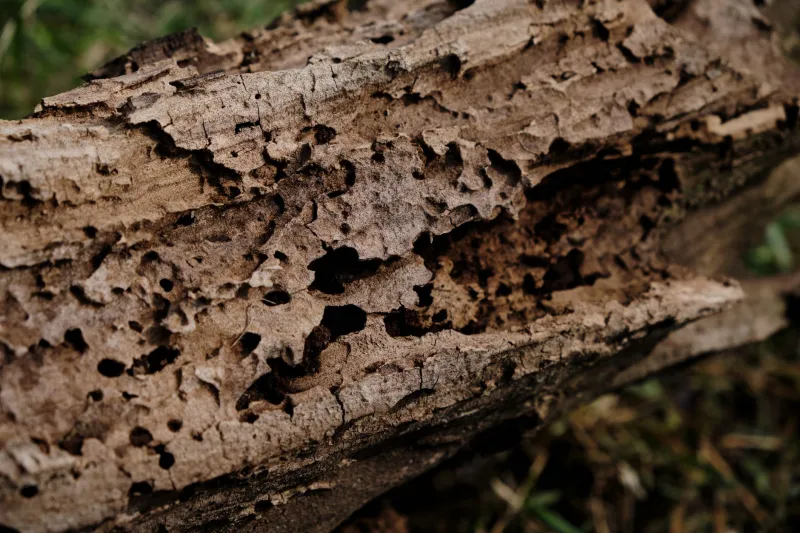
In an old Wessex house, timber is rarely silent. It moves with the seasons, dries after rain, absorbs moisture from the air and, on occasion, hosts insects. The discovery of small round holes in a beam, or a scattering of dust on a floor below, can provoke alarm — particularly when a survey report has used the word woodworm without qualification. But holes in historic timber are often a record of past activity rather than proof of a present problem. The useful questions are not simply whether holes exist, but which insect made them, whether activity continues, and whether the structure is at risk. A measured approach begins with identification and monitoring, not with a sprayer.
First, Identify the Likely Culprit
The common furniture beetle, Anobium punctatum, is the insect most frequently found in British buildings. Its exit holes are round and small, typically around 1.5 to 2mm across. The frass — the dust produced by larvae as they tunnel — is fine and gritty, rather like pepper. Furniture beetle favours softwood and can be found in floorboards, joists, roof timbers, skirting and furniture, especially where timber has become damp. Adult beetles emerge in spring and summer, so fresh dust is most likely to appear in the warmer months.
The deathwatch beetle, Xestobium rufovillosum, is a more serious concern in historic structures. Its exit holes are larger, often 6 to 8mm across, and it attacks old oak — particularly oak that has been softened by fungal decay. The tapping sound sometimes heard in spring is the beetle's courtship signal, not a supernatural warning. Deathwatch frass is coarser than furniture beetle dust and may include small pellets. In Wessex, it is associated with roof timbers, wall plates and other structural oak in damp conditions.
The house longhorn beetle, Hylotrupes bajulus, produces large oval exit holes, often 6 to 10mm across, and attacks softwood roof timbers. Its distribution in Britain is limited, with statutory control areas in parts of Surrey and London, but it is worth knowing about because it can cause significant structural damage. Other insects — powderpost beetles, wood weevils and bark borers — are usually associated with damp or recently felled timber and are less likely to be a long-term structural threat.
Old Holes, New Dust: Reading the Evidence
A hole alone tells you that an insect emerged at some point. It does not tell you when. Fresh exit holes tend to have pale, sharp edges; older holes become darkened and rounded with age. Frass is the more useful indicator. Clean the timber surface carefully, place white paper or card beneath the suspect area, and leave it for several weeks. Fresh frass falling onto the paper is evidence of current activity. Mark the holes with a pencil or a small piece of low-tack tape, photograph them with a scale, and record the date. Repeat the exercise after a month or two.
Inspect the undersides of beams, the ends of joists built into masonry, wall plates, roof trusses and the joints where timber meets brick or stone. These are the places where moisture accumulates and where beetles are most likely to establish. A torch and a hand mirror are more useful than a tin of treatment. A moisture meter can also help: wood-boring beetles generally favour timber with a moisture content above about 18 to 20 per cent, and sustained damp is often the underlying reason for infestation.
The Moisture Question Comes First
Before any chemical treatment is considered, the source of moisture should be found. In old houses, beetle activity is frequently secondary to a leaking gutter, a blocked downpipe, a failed roof covering, a bridged damp-proof course, raised external ground levels or inadequate ventilation in a cellar or roof void. Deathwatch beetle in particular is associated with fungal decay in oak, and drying the timber may do more to limit activity than any spray.
This is not a argument for sealing an old building tightly. Historic construction relies on breathability and controlled ventilation. The aim is to keep timber dry without trapping moisture elsewhere. Clearing gutters, repairing rainwater goods, maintaining airbricks and ensuring roof voids can breathe are unglamorous tasks, but they are the foundation of timber conservation.
What Conservative Treatment Looks Like
Not every flight hole requires intervention. Where activity is old and the timber remains sound, recording and monitoring may be sufficient. Where active infestation is confirmed and localised, targeted treatment is preferable to blanket application. Borate-based preservatives can be applied to affected timber, and pastes or rods can be used where timber ends are embedded in masonry. Severely decayed sections may need to be cut out and replaced with matching timber, but this should be done conservatively, retaining as much historic fabric as possible.
Indiscriminate surface spraying of historic oak is rarely good practice. It can stain surfaces, obscure evidence of future activity and may not penetrate deeply enough to reach larvae. Fogging or space sprays are difficult to justify in occupied historic buildings. If treatment is necessary, ask for a method statement that identifies the species, the extent of activity, the product proposed and the reasons for using it. For listed buildings, repairs and alterations to historic fabric may require listed building consent; treatment itself may not, but the two should be considered together with the conservation officer.
When to Call in a Specialist
A specialist survey is advisable where deathwatch beetle or house longhorn beetle is suspected, where frass is falling from structural timbers, where timbers are hollow or crumbly, or where activity is widespread. It is also sensible where previous treatment has failed or where the species has not been confidently identified. A good survey should include species identification, moisture readings, a plan of affected timbers, photographs and a clear assessment of structural implications.
In 2026, the emphasis in historic building conservation is on integrated pest management: identify, monitor, reduce moisture, record and intervene minimally. Chemical treatment remains a tool, but it is not a substitute for understanding the building. The sawdust beneath the beam is evidence, not a verdict. In old Wessex houses, patience and good records are conservation instruments in their own right.