The Quiet Climb: Conserving Historic Staircases in Old Wessex Homes
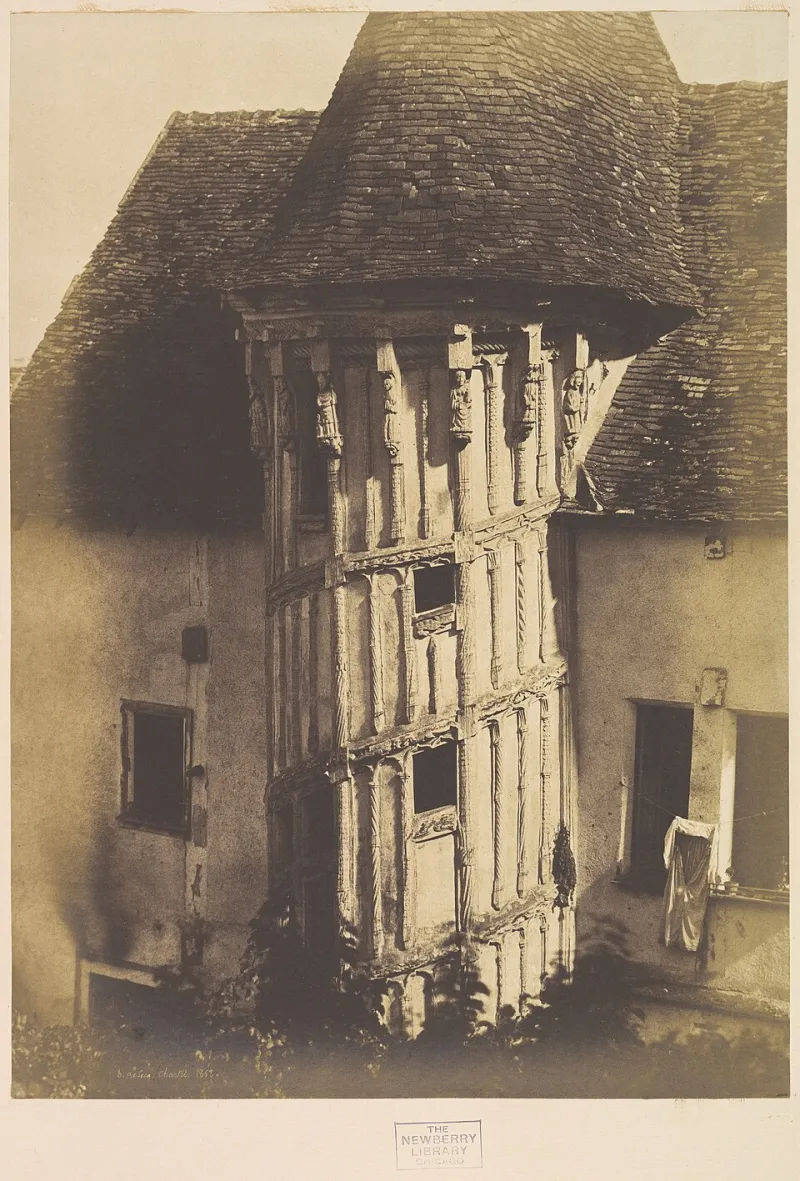
Photo: Henri-Jean-Louis Le Secq, Public domain, via Wikimedia Commons
A staircase is rarely the first thing an owner notices on returning home, yet few parts of a historic Wessex house work so consistently hard. It is a piece of fitted joinery, a route through the building and, often, one of the oldest surviving records of domestic life. Treads hollowed by generations of feet, a handrail polished by hands, a balustrade altered when a landing was reconfigured: these are not defects to be erased but evidence to be understood. The conservation of a staircase begins with that shift in perspective — from replacement to reading, and from repair to restraint.
Begin with the Whole Stair
Before inspecting individual treads or balusters, step back and consider the staircase as a structure. Is it a straight flight, a dog-leg, a half-turn with winders, or a tight spiral? Is it built with closed strings, where the treads and risers are housed into the stringer, or an open string with cut brackets? Are the principal timbers oak, elm or pine, and do later sections differ in species, section size or fixing method? Such questions reveal whether the stair is largely original, partly rebuilt or a later insertion into an older shell.
Look also at the relationship between the stair and the walls. In many old houses the flight is held between masonry or timber-framed partitions, with the stringers bearing into the wall. Movement in the stair may therefore reflect movement in the building rather than a failure of the joinery itself. A methodical visual survey — from the foot of the flight to the head, and then from the underside where access allows — is more useful than a hurried descent.
Creaks, Deflection and the Question of Movement
Not every noise is a warning. A creak underfoot often arises from slight seasonal shrinkage, a loosened tread, or two timbers rubbing where a glue line has failed. In older stairs, such movement can be chronic yet benign. The more significant question is whether the stair remains stable under load and whether deflection is local or widespread.
A single tread that flexes slightly is one matter. A whole flight that feels springy, a stringer that has bowed away from the wall, or a newel post that has begun to lean may point to a loss of bearing, decay at the wall plate, or the cumulative effect of an earlier alteration. Probe accessible timbers for softness, particularly at the base of newel posts, where the stair meets the floor, and beneath any winders where water from a historic leak may have collected. Look for frass or fungal staining that could indicate insect or damp-related decay. Where the underside is visible, check the carriage timbers and any supporting trimmer.
Movement that is accompanied by cracking plaster at the stair wall, separation of skirtings, or a change in the level of the landing deserves closer attention. These may be signs that the stair is moving in relation to the building, not simply settling within its own joints.
Treads and Nosings: Wear as a Record
Worn nosings are the most familiar form of stair wear. The front edge of a tread is abraded by every footfall, and in a historic house the resulting hollow is part of the patina. The conservation approach is to repair rather than replace. A worn nosing can be built up with a matching hardwood insert, carefully let in and glued, or a new slip can be fitted over the existing tread where the structure remains sound. Repairs should be visible on close inspection but should not dominate the stair.
Avoid the temptation to plane or sand away the hollow. This removes historic fabric and can weaken the tread. Similarly, modern two-part fillers are rarely appropriate in structural or high-wear locations; they may fail, trap moisture and obscure the true condition of the timber. Where a tread is decayed beyond repair, replace only that section, using well-seasoned timber of a compatible species and matching the existing section as closely as possible. Reclaimed timber can be a good source, provided it is sound and free from beetle attack.
Balustrades and Handrails: Security Without Erasure
A loose baluster is a safety concern and a conservation problem in equal measure. Check each baluster for movement at its base and beneath the handrail. Many are fixed with small tenons or cut nails, and these joints can fail after centuries of use. The correct repair is usually to re-glue and re-fix the existing component, not to introduce metal plates or modern brackets that damage historic surfaces. Where a baluster is missing or broken beyond repair, a sympathetic replacement can be made by a joiner, following the profile of the surviving examples.
The handrail itself should be continuous, securely fixed and comfortable in use. In a historic house, achieving modern expectations of safety may require careful compromise. Building Regulations recognise the particular constraints of historic buildings, but the practical aim is to secure the existing balustrade and handrail before considering additional measures. Where an infill panel or additional rail is needed, it should be reversible and visually subordinate to the historic joinery. In a listed building, such alterations may require listed building consent, and early advice is essential.
Winding Steps and Tight Turns
Winders are among the most heavily loaded parts of any stair, because the inner edge of each tread is narrow and the outer edge carries the greatest footfall. Wear is often concentrated at the nosing, and the tread may have lost thickness. Check the supporting carriage beneath the winders and the condition of the string. Repairing the existing treads is usually preferable to rebuilding the turn, which can alter the geometry and character of the stair. Where a winder is beyond repair, a carefully matched replacement is acceptable, but the original profile should be recorded first.
The Case Against Over-Restoration
A historic staircase should not look new. Cleaning rather than stripping, waxing rather than heavily lacquering and repairing rather than replacing are the guiding principles. Paint that has accumulated over centuries may itself be historic; removing it should be a considered decision, not a default. Before any work, record the stair in photographs and notes, including any maker's marks, carpenter's numerals or evidence of earlier configurations.
At Wessex Restoration, the approach is to treat the staircase as a piece of structural joinery and a historic object at the same time. A conservative repair that keeps the original treads, re-fixes the balustrade and addresses the cause of movement will almost always serve an old Wessex house better than a new stair that erases its history. The quiet climb is worth preserving — not because it is old, but because it still works.