The Geometry of Daylight: Conserving Leaded Lights and Stained Glass in Old Wessex Houses
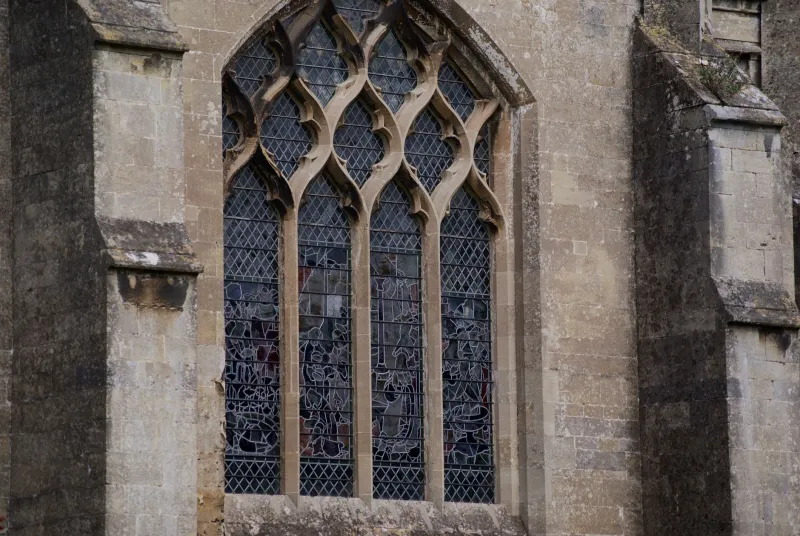
Leaded lights and stained-glass panels are among the most eloquent features of an old Wessex house. They divide daylight into quarries, borders and coloured medallions, and they carry the marks of the craftspeople who made them. Yet glazing is also one of the most vulnerable parts of a historic building. Lead fatigues, iron corrodes and condensation quietly attacks the very elements that give a window its character. The aim of conservation is not to make an old window look new, but to slow its deterioration while retaining as much original material as possible.
Begin with a measured assessment
A sensible inspection starts with the window as a whole, not just the glass. Record the pattern of the leading, the condition of the surrounding stone or timber, the presence of iron saddle bars and the history of repairs. Photographs taken in raking light will reveal bulges, cracks and earlier lead patches that are easy to miss in flat daylight. In Wessex, where many houses sit in exposed positions or face prevailing south-westerly weather, the condition of the external face is especially important. Look for white corrosion products on lead, rust staining from ferrous fixings and any glazing that has begun to bow outward under wind loading.
Inside, examine the junctions between glass and lead. A sound came should grip the glass firmly and show a consistent profile. If the lead has become thin, cracked or detached, water can enter the rebate and begin to break down the bedding putty. Small defects are not automatically a reason for wholesale re-leading. A conservator will often prefer to repair individual cames, re-bed loose quarries and renew local ties rather than disturb an entire panel.
Understanding lead cames and their fatigue
Lead is a soft metal, and historic cames were often cast or milled to profiles that are no longer standard. Over decades, thermal movement and the weight of the glass cause the lead to creep. Pannels may sag, particularly in large lights or where saddle bars have failed. The resulting distortion is not merely visual: it puts stress on the glass and can lead to cracks at the edges of quarries. Repairs should therefore address the cause as well as the symptom. Strengthening the framework, replacing corroded saddle bars and re-tying the panel may be more appropriate than simply flattening the lead.
When re-leading is unavoidable, the original glass should be retained wherever possible. Each piece should be numbered, recorded and cleaned with care before being re-leaded in a manner that respects the original design. A good specification will state the lead profile, the alloy, the width of cames and the method of weatherproofing. It will also require the retention of original quarries and painted details, even where these are fragmentary.
Saddle bars, ferramenta and corrosion
Iron saddle bars, sometimes called ferramenta, support leaded panels against wind pressure. Corrosion is common in old windows, particularly where rainwater has been able to sit around the fixings. Rust expands and can crack glass or stain surrounding stone. During inspection, check that bars are securely fixed, that they are not heavily sectioned by rust and that their lead ties remain flexible. Where replacement is necessary, galvanised or non-ferrous alternatives may be considered, but the visual and structural character of the original arrangement should be respected.
Condensation and the internal environment
Condensation is often mistaken for a simple ventilation problem, but in historic glazing it can be a symptom of inappropriate internal conditions. Modern heating and cooking produce moisture that migrates to cold glass surfaces. If the window has been sealed with impermeable mastic or internal secondary glazing, that moisture may become trapped. The result is corrosion of lead, failure of putty and, in stained glass, damage to painted details. The first response should be to improve ventilation and reduce moisture at source, not to drill holes in the glazing or apply irreversible coatings.
Cleaning historic glass
Cleaning should be conservative and infrequent. Dust and cobwebs can be removed with soft brushes and low-suction vacuum tools, while stable dirt on external surfaces may be left where it does no harm. Harsh detergents, abrasive pads and pressure washing are inappropriate. Stained glass with painted decoration requires particular care: the paint layer may be fragile and soluble, and any cleaning method should be tested by a specialist. The objective is to reveal the design without eroding evidence of age.
Protective glazing: a considered option
Secondary or protective glazing can reduce heat loss and shield historic glass from weather, but it is not a universal solution. Any intervention must allow the original window to breathe and must not trap moisture. Ventilated systems, removable panels and well-detailed frames are preferable to sealed units. In many cases, repairing the existing window and improving the building's ventilation will achieve more for the glazing than an additional layer of glass. Where protective glazing is proposed, it should be part of a broader conservation strategy and, in listed buildings, may require consent.
When to call a specialist
Bulging panels, cracked quarries, corroded saddle bars and painted glass that has begun to flake all merit expert attention. A conservator can assess whether local repair will suffice or whether a panel should be removed for workshop treatment. Early intervention is almost always less disruptive and less costly than waiting for a panel to collapse. In old Wessex houses, where glazing often forms part of a carefully balanced facade, the conservation of original windows is also a contribution to the building's wider significance. Handled with judgement, leaded and stained glass can continue to shape interior light for generations to come.