Breathable by Design: Specifying Paint and Finish for Old Wessex Walls
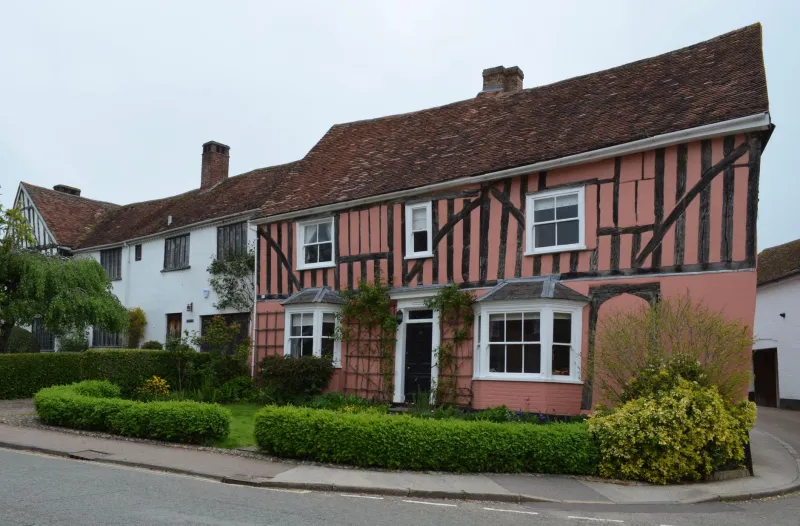
Paint is often treated as the final, cosmetic layer in a repair project. In an old Wessex house it deserves a more careful reading. On cob, flint-and-lime render, early brick and timber frame, the finish is part of the wall's environmental control. It must allow moisture to move, not seal it in. A product that looks convincing on a sample board can, if wrongly chosen, trap damp and accelerate decay.
Begin with the wall, not the colour
Historic walls in the region are varied, but many share a useful characteristic: they are vapour-open. Cob is earth-based and sensitive to prolonged wetting. Flint rubble is usually held together and protected by lime mortar and render. Timber frames rely on the infill and external finish to shed rain while allowing incidental moisture to escape. Brickwork laid in lime mortar also benefits from a finish that does not lock water into the fabric.
Breathability should not be confused with waterproofing. A breathable finish permits water vapour to pass through the coating and wall build-up. It does not prevent driving rain from wetting a facade, nor does it excuse a defective roof, gutter or rainwater goods. The first task is always to find and correct the source of water. Only then should the finish be specified.
Diagnosing existing coatings
Before selecting a new paint, establish what is already there. A small, inconspicuous test area can reveal whether the coating is limewash, distemper, an emulsion, an oil-based paint or a modern masonry product. Gentle scraping, a water droplet and careful observation of how the surface reacts will often provide the first clues. Solvent tests should be used sparingly and only after trial on a hidden area, particularly where historic surfaces or decorative schemes may survive.
Look closely at performance. Blistering, flaking, powdering and patchy dampness can indicate that moisture is accumulating behind an impervious layer. Salts at the surface may point to moisture movement within the wall. A moisture meter is a useful aid, but readings must be interpreted with care and in context; it is not a substitute for understanding the construction and drainage of the building.
Where an existing coating is sound, vapour-permeable and visually acceptable, retention is often the most sensible course. Wholesale removal is not a routine preliminary. On listed buildings, altering or removing finishes can require listed building consent, and external colour changes may also need agreement. Advice should be sought before work begins.
Limewash, distemper and linseed
Limewash remains the benchmark for many traditional exteriors. It is highly vapour-permeable, alkaline and sacrificial: it wears away gradually rather than trapping moisture, and it can be renewed in thin coats. It suits lime render, cob and many historic brick and stone surfaces, though it requires suitable preparation and a maintenance cycle. It is not a universal primer or a shortcut for unstable substrates.
Distemper is an interior finish with a long pedigree. Soft and porous, it is well suited to plaster ceilings and walls where a matt, chalky appearance is appropriate. It is not a washable finish and should not be specified where frequent scrubbing is expected. Its value lies in allowing plaster to dry and in providing a traditional, visually quiet surface.
Linseed oil paint is particularly associated with timber joinery. It forms a microporous film, moves with the timber and can be maintained by overcoating rather than complete stripping. It requires careful preparation, adequate drying time and a disciplined approach to coats. It is not a quick modern system, but on historic windows, doors and timber cladding it can be an excellent match for the building.
Modern microporous masonry paints occupy a more crowded market. Some are appropriate for historic walls; others are effectively waterproof coatings with marketing language that obscures their performance. Specifiers should ask for vapour resistance data and compare products rather than relying on the word breathable. Acrylic, PVA and highly flexible waterproof coatings are rarely appropriate for traditionally built walls.
Colour and context
Colour is a conservation matter as well as a aesthetic one. Historic schemes in Wessex were commonly derived from earth and mineral pigments: ochres, umbers, creams, dull reds and soft greens. These tones tend to sit comfortably against cob, flint, brick and timber. Brilliant whites and saturated modern colours can appear discordant, particularly on rendered cob or small-scale flint cottages.
Sample panels are essential. Apply the proposed finish to a discreet area and view it in daylight, in both sun and shade. A colour that appears restrained on a card can become dominant across a whole elevation. On timber, the sheen and texture of linseed paint differ markedly from modern gloss. On rendered walls, limewash varies with coat thickness and weathering, which is part of its character.
In conservation areas and on listed buildings, external colour can be controlled. Early discussion with the local conservation officer is preferable to submitting a scheme that must later be undone.
Preparation, workmanship and maintenance
Good paint cannot compensate for poor preparation. Loose material should be removed with gentle methods, not aggressive abrasive blasting. Repairs should use compatible mortars and materials, and new render or plaster should be fully cured before decoration. Damp walls should not be painted until the cause has been addressed and the wall has had time to dry.
Record the products used, including manufacturer, colour reference and batch where available. Keep a maintenance note for future owners. Limewash and distemper may need renewal more often than modern coatings, but their renewal is usually straightforward and less damaging than stripping a failed impervious film.
The right finish for a historic Wessex home is the one that respects the wall beneath it. Limewash, distemper and linseed are not nostalgic choices; they are practical systems with predictable behaviour. Modern alternatives can have a place, but only when their vapour performance is understood. The colour of caution is not a colour at all: it is the discipline of testing, specifying and maintaining a finish that lets the building breathe.